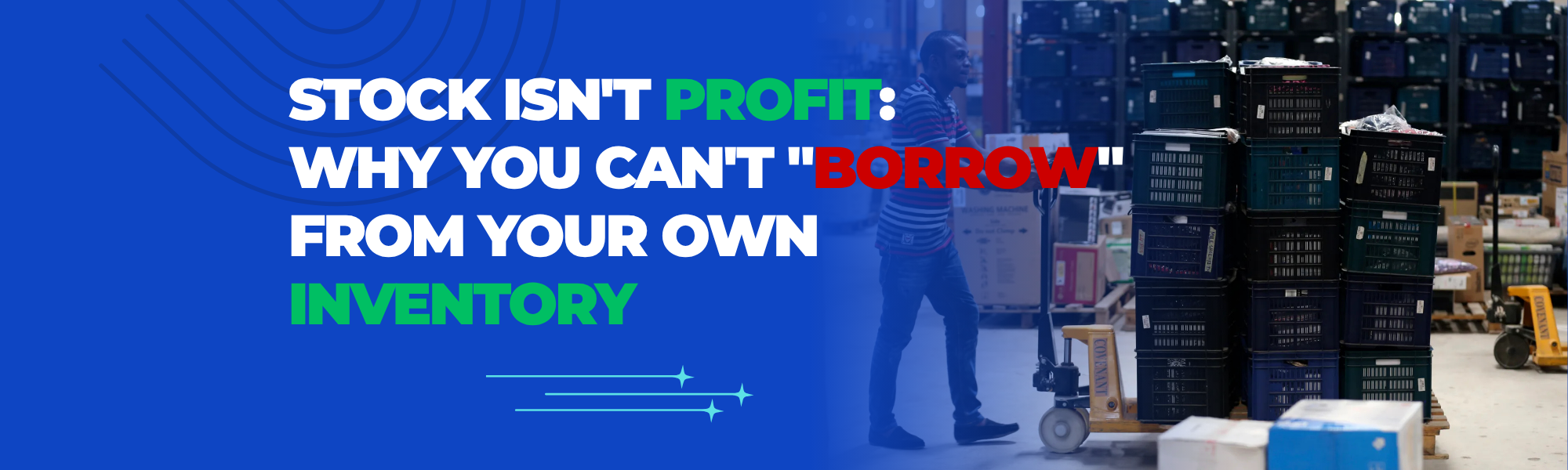
Rent is due, cash is tight, but your shelves are full. Sound familiar? That stock isn’t cash in your pocket—it’s frozen money. Discover why the "full shelf trap" is stalling cash flow for Nigerian SMEs, and how to break the cycle.
Rent is due tomorrow. You're short. But your shelves are full with bags of rice, cartons of drinks, boxes of shoes, all of it "money," technically. So you do what a lot of Nigerian business owners quietly do: you pull stock out to sell off-book, or you dip into goods meant for a customer's order, telling yourself you'll "restock before anyone notices."
You didn't steal from anyone. You borrowed from yourself. That's the trap and it's one of the quietest ways a healthy-looking business slowly starves itself.
The Lie Full Shelves Tell You
A shop that looks stocked feels like a shop that's winning. But stock sitting on your shelf isn't cash in your pocket, it's cash you've already spent, waiting to be converted back into cash through a sale. Until that sale happens, it's frozen. And frozen money can't pay rent, staff, or your supplier's next invoice.
This isn't a small, occasional problem in Nigerian SMEs, it's structural. Inventory Management and SMEs Profitability research on Nigerian eateries, supermarkets, and furniture businesses found that nearly 60% to 70% of total funds employed in these SMEs are tied up in current assets, with inventory forming the single biggest chunk of that.
That means for many business owners, most of what they "own" is actually just stock waiting to become money and every time it's raided for a shortfall, it delays the day it ever does.
Zoom out globally and the pattern holds: businesses worldwide currently have an estimated $5.5 trillion sitting locked in working capital — inventory and unpaid invoices, money that can't be used for growth, emergencies, or operations — "9 Statistics That Quantify the Treasury Cost of Tied-Up Working Capital," 2026. Nigerian SMEs are not exempt from this, if anything, with limited access to affordable credit, they feel it harder.
Why "Borrowing" From Stock Never Actually Works
Here's the part that stings: pulling from inventory to cover a cash gap doesn't solve the gap, it just moves it forward and makes it bigger.
You still owe the same money, just later, with less stock available to sell your way out of it.
You risk stockouts on the exact items customers actually want, right when they want them, turning today's cash problem into tomorrow's lost sale.
Your books stop reflecting reality. What you think you have on the shelf and what's actually there quietly drift apart, until a stock count reveals a gap nobody can explain.
The real issue isn't the stock. It's not knowing, at any given moment, the difference between what you own and what you can actually spend.
Separate What You Own From What You Can Spend With AiBiz
This is precisely the confusion aibizglobal.com was built to end. Instead of guessing where your money really is, AiBiz gives you a live, honest view of your business: real-time sales tracking, inventory levels that update the moment stock moves, and reports that show you clearly know what's cash, what's stock, and what's still sitting as unpaid debt. No more mental math between the shelf and the bank account.
When you can see your numbers in real time, you stop needing to "borrow" from tomorrow to survive today. You plan for the rent, the restock, and the slow week, because you actually know what's coming, instead of hoping the shelf will cover it.
Full shelves should be a sign of strength, not a hidden liability waiting to catch up with you.
Know exactly what's cash and what's stock before the gap catches you.
Start your 14-day free trial. No credit card required. 👉 aibizglobal.com