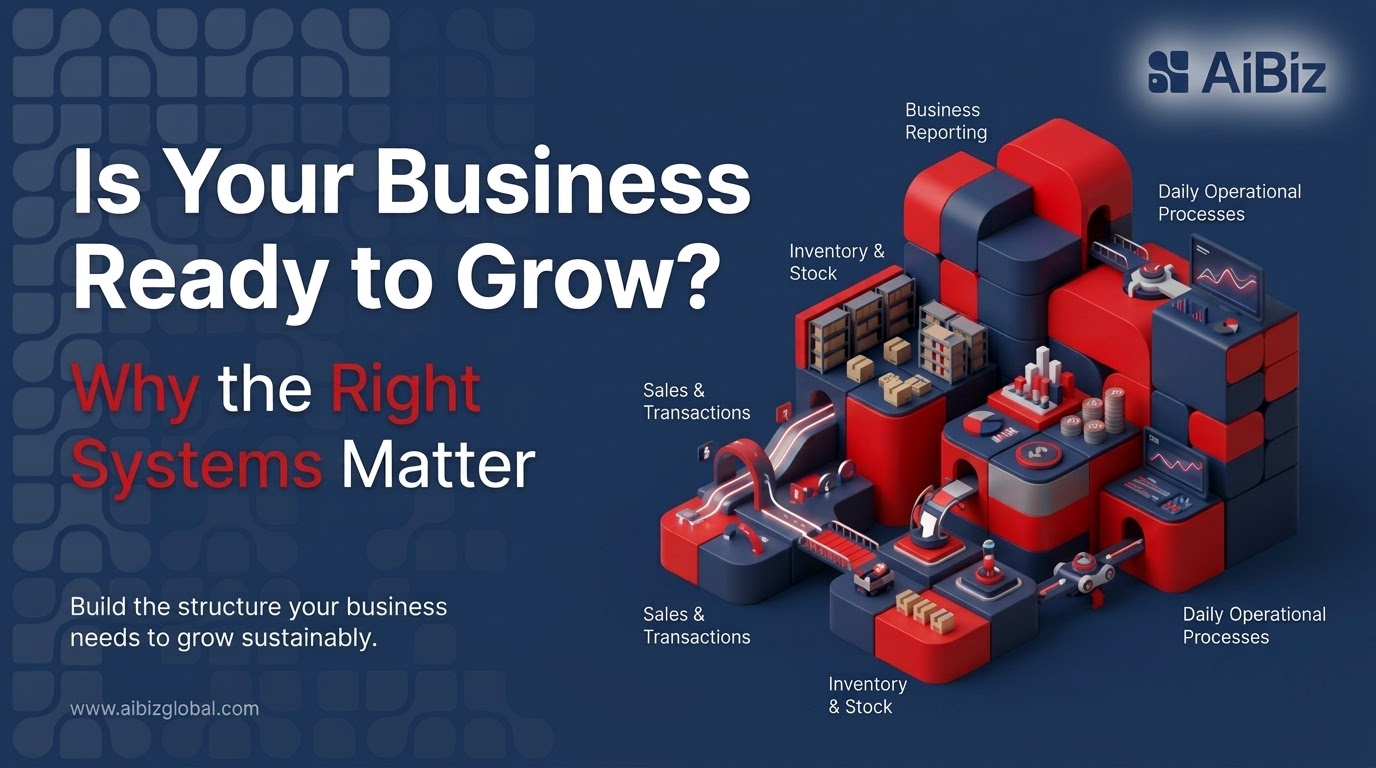
Business growth brings exciting opportunities, but it also comes with increased responsibilities. More customers, transactions, products, and expenses mean more moving parts to manage. Without the right systems in place, growth can quickly become overwhelming. Discover why organised processes, effective business management, and the right technology are essential for building a business that can grow sustainably.
Every business owner wants to see their business grow. More customers, more sales, increased revenue, and new opportunities are all signs of progress.
But growth also comes with more responsibility.
As a business expands, there are more transactions to record, more inventory to monitor, more expenses to track, and more customers to attend to. Processes that once worked perfectly for a small operation may become difficult to manage as the business gets bigger.
This is where many businesses encounter a challenge: they focus on growing their sales without paying enough attention to the systems that support their operations.
Business growth requires more than increased demand. It requires structure.
Growth Can Expose Operational Gaps
When a business is small, it may be relatively easy to keep track of daily activities manually. The owner might remember most transactions, monitor stock personally, and handle customer requests without much difficulty.
However, as operations expand, relying entirely on memory, scattered records, or disconnected processes can become increasingly difficult.
For example:
A business with more customers needs a reliable way to keep track of sales and transactions.
A business with more products needs better inventory management and stock control.
A business with increasing expenses needs consistent financial management.
A business handling more daily activities needs organised processes and accessible records.
These are not necessarily signs that a business is doing something wrong. They are signs that its operations may need to evolve.
1. Keep Your Business Records Organised
Good business decisions depend on good information.
When sales, expenses, purchases, and other business activities are recorded inconsistently, it becomes harder to understand what is happening within the business.
Organised records make it easier to review transactions, monitor performance, and identify areas that need attention.
Rather than waiting until the end of the month to piece together what happened, make record-keeping part of your daily business routine.
2. Pay Attention to Your Inventory
For businesses that sell physical products, inventory is an important part of daily operations.
Poor stock control can lead to avoidable problems. You might run out of popular products without noticing, hold on to slow-moving stock for too long, or struggle to determine when to restock.
A consistent inventory management process helps you understand what is available, what is selling, and what needs attention.
The more products your business handles, the more important it becomes to have a clear picture of your stock.
3. Understand Where Your Money Goes
Making sales is important, but revenue alone does not tell you how well your business is performing.
You also need to understand your expenses, cash flow, and the financial demands of running your operations.
Regularly reviewing income and expenditure can help you recognise spending patterns, identify unnecessary costs, and make more informed financial decisions.
Financial management should not be something you only think about when money becomes tight. It should be an ongoing part of running your business.
4. Build Processes That Can Grow With You
If every business activity depends on the owner remembering what to do next, growth can become exhausting.
As your business expands, consider which tasks can be organised into clear processes, delegated where appropriate, or made less dependent on repetitive manual work.
This could mean establishing a consistent way to record sales, creating a routine for stock checks, or setting aside time each week to review business performance.
The goal is not to make your business unnecessarily complicated. It is to make everyday operations easier to manage.
5. Use Technology to Bring Your Operations Together
Business management software can help businesses organise important aspects of their operations.
Depending on the software and its available features, this may include sales management, inventory management, financial records, POS transactions, and business reporting.
Instead of relying on scattered notebooks, spreadsheets, and disconnected records, businesses can explore digital tools that make managing their activities more structured.
The right solution should support the way your business operates and address the challenges you actually face.
Growth Should Not Mean Losing Control
A growing business will naturally become more demanding. That is part of progress.
But growth should not leave you constantly struggling to understand your sales, locate important records, monitor your inventory, or keep track of your expenses.
The earlier you establish organised processes, the easier it becomes to manage increasing business demands.
At AiBiz, we believe businesses should have access to tools that support better organisation and business management.
Because growing a business is one thing. Building the structure to sustain that growth is another.
Don’t just prepare your business to get bigger. Prepare it to manage bigger.
Get started today at www.aibizglobal.com