Every business goes through different stages, and each stage comes with unique financial challenges. Discover how understanding your business lifecycle can help you manage costs, protect your profit margins and make smarter decisions for sustainable growth.
For many entrepreneurs and business owners, the focus is often on increasing sales, generating more revenue and maintaining healthy profit margins, but there is another side of profitability that is sometimes overlooked: Managing costs effectively.
A business can generate significant revenue and still struggle financially if its expenses are not properly controlled. One way to better understand how your costs should be managed is by understanding the Business lifecycle.
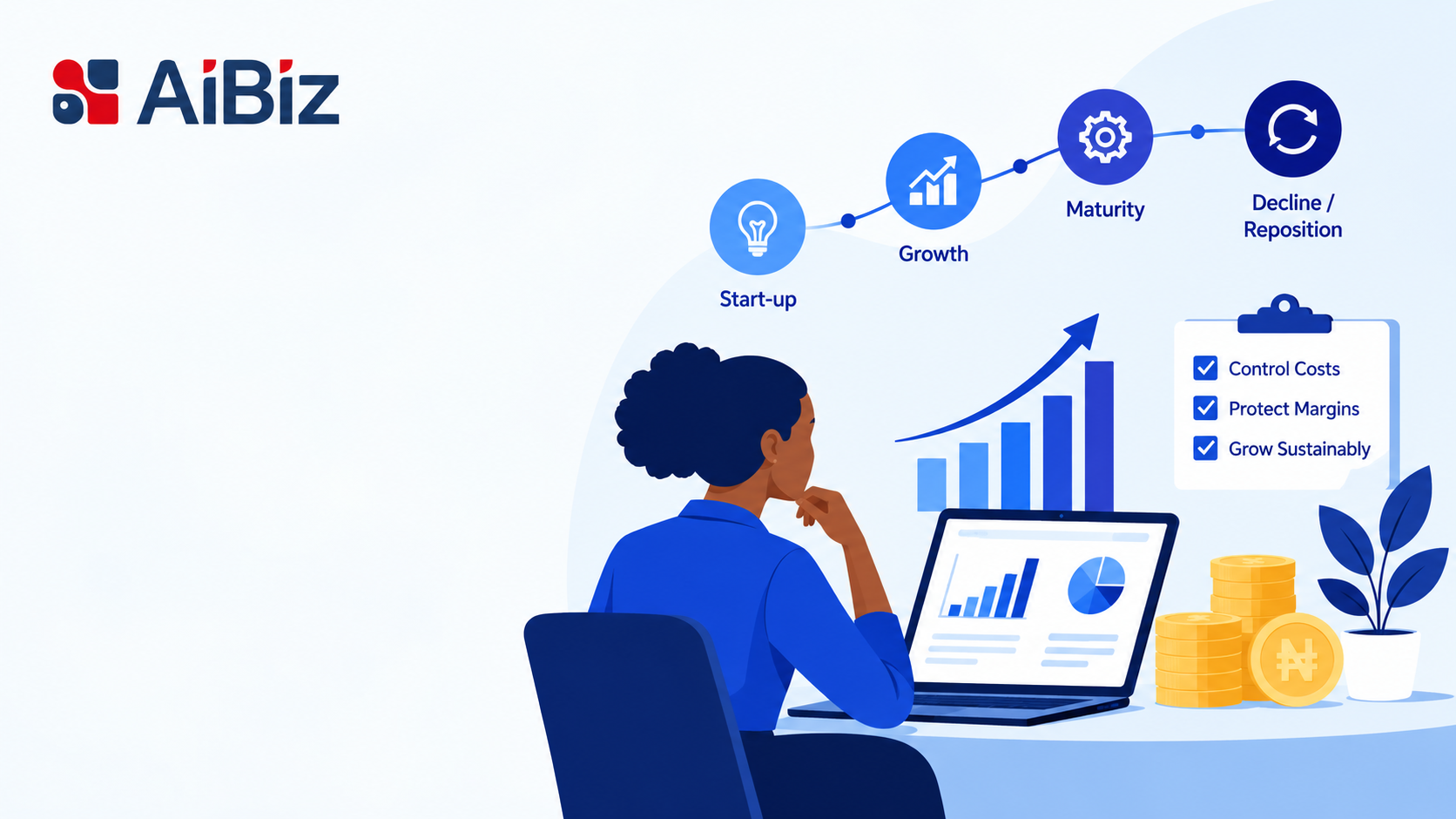
Just like living organisms, businesses go through different stages of development. The business lifecycle is generally divided into five stages: Launch, Growth, Shake-out, Maturity and Decline. Each stage comes with different financial pressures, opportunities and cost-management priorities.
Understanding where your business currently stands can help you make smarter decisions about where to spend, where to cut back and where to invest.
1. Launch Phase: Keep Costs Simple
This is the stage where the business begins operations, introduces its products or services and searches for its place in the market. Sales are usually low, while start-up and operating costs can be relatively high. Cash flow may be tight, and losses are common. At this stage, the goal is to build sustainably.
What can you do?
Outsource non-core activities instead of immediately hiring full-time employees.
Avoid expensive long-term leases; consider working remotely, from home or in shared spaces.
Focus on cost-effective marketing such as content, networking, partnerships and direct customer engagement.
Clearly define your core value proposition and test what customers are willing to pay for.
Keep business and personal finances separate and track every sale and expense from day one.
Key focus should be on preserving cash and proving that the business model works.
2. Growth Phase: Scale your business and keep Cost controlled
The Growth stage brings increasing sales, customers and cash inflows. It is an exciting phase, but rapid growth can also create a new problem of rapidly increasing expenses. Hiring too quickly, increasing inventory unnecessarily or taking on expensive infrastructure can turn growth into a cash-flow problem.
What can you do?
Automate repetitive processes such as invoicing, data entry and customer communication.
Negotiate better pricing and payment terms with suppliers as your purchasing volume increases.
Adopt zero-based budgeting, where each major expense must be justified based on its current business value.
Monitor your cost of acquiring customers and compare it with their lifetime value.
Invest in customer retention because keeping existing customers is often more cost-effective than constantly acquiring new ones.
Key focus should be on using the cash generated by growth to build a stronger and more efficient business.
3. Shake-out Phase: Improve Efficiency Before the Market Forces You To
In the Shake-out stage, sales may continue to increase, but at a slower rate. Competition becomes stronger, customer acquisition may become more expensive, and the market may begin approaching saturation.
This is where businesses need to ask: “Are we growing efficiently, or are we simply spending more to maintain growth?”
What can you do?
Identify products, services or customers that generate low margins and reassess them.
Review your major operating expenses and eliminate unnecessary spending.
Improve processes and reduce waste before increasing headcount.
Strengthen your competitive advantage instead of competing solely on price.
Use financial reports to monitor gross margin, operating expenses and cash flow regularly.
Key focus should be on becoming more efficient and protecting your margins.
4. Maturity Phase: Be Innovative in Operations and Find New Opportunities
At maturity, sales growth begins to slow or plateau. The business has an established customer base and predictable operations, but profit margins may come under pressure as competition increases and costs continue to rise. The priority now is to protect profitability while finding new avenues for growth.
What can you do?
Review your pricing regularly to ensure it still reflects your costs and value.
Identify opportunities to cross-sell or upsell to existing customers.
Invest selectively in technology that reduces long-term operating costs.
Review supplier contracts and renegotiate where possible.
Explore new products, customer segments or markets that complement your existing business.
Key focus should be on protecting margins, retaining customers and creating new sources of revenue.
5. Decline Phase: Control Costs and Decide What Comes Next
In the Decline stage, sales, profitability and cash flow begin to fall. This may happen because of changing customer preferences, new technology, stronger competitors or an outdated business model. Decline does not always have to mean the end. For some businesses, it can be a signal to reinvent, restructure or reposition.
What can you do?
Identify the products and services that remain profitable and focus resources on them.
Cut non-essential expenses and preserve available cash.
Reassess your target market and understand how customer needs have changed.
Consider pivoting the business, introducing new offerings or adopting new technology.
Make difficult decisions early rather than allowing declining cash flow to determine your options.
Key focus should be on preserving cash, adapting to change and determining whether to restructure, reinvent or exit.
The Bottom Line
There is no single cost-management strategy that works for every business. What makes sense for a start-up may be completely different from what a mature business needs.
The important question is: Where is your business in its lifecycle, and are your spending decisions appropriate for that stage?
Regardless of your business's current stage, you need clear visibility over your revenue, expenses, debts, receivables, payables and cash flow to make informed decisions.
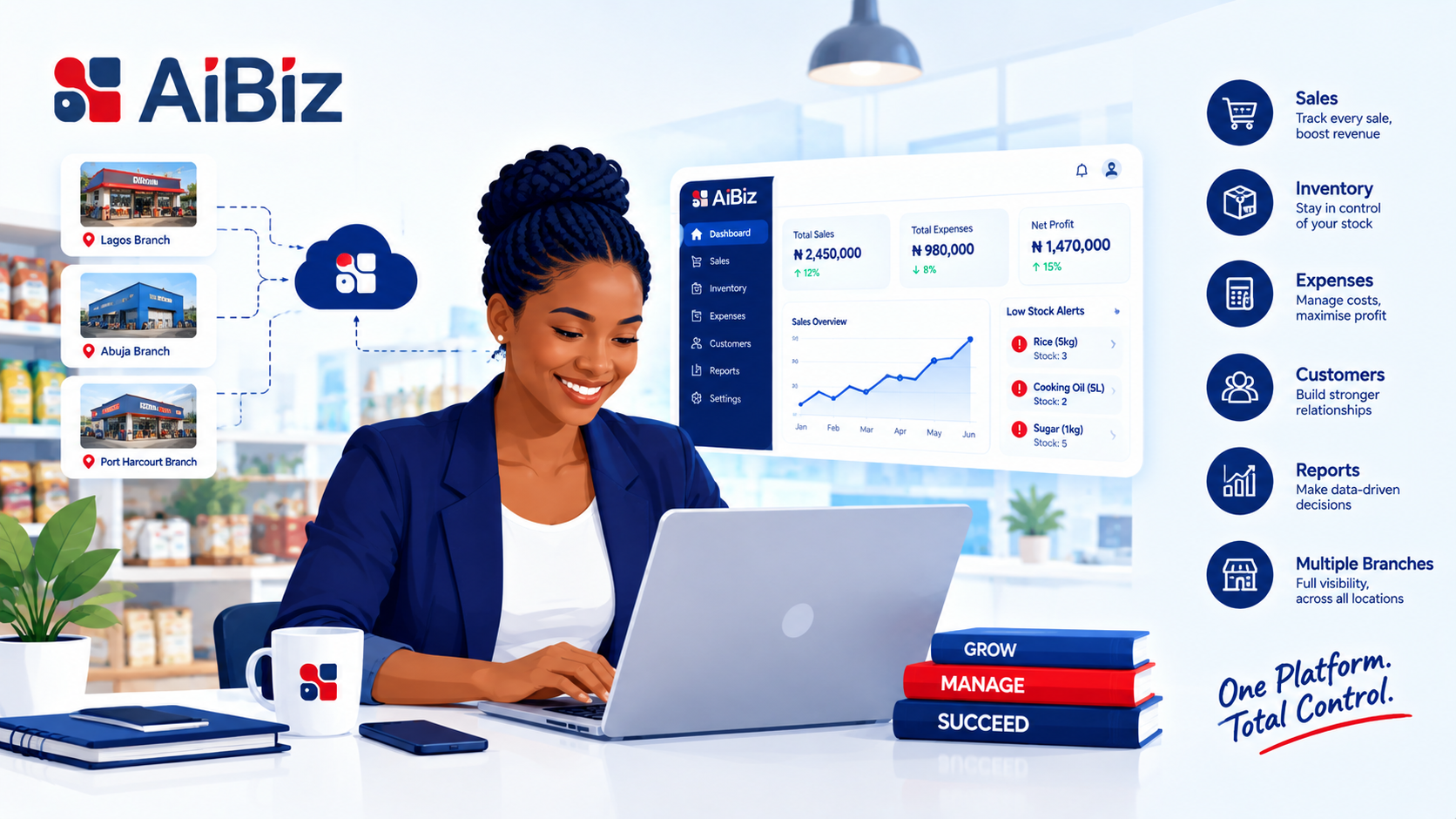
This is where Aibiz can help. With the right financial tools, you can keep your business finances organized, monitor your performance and make better decisions as your business evolves.
Your business may be growing, maturing or changing, but your financial management should grow with it.