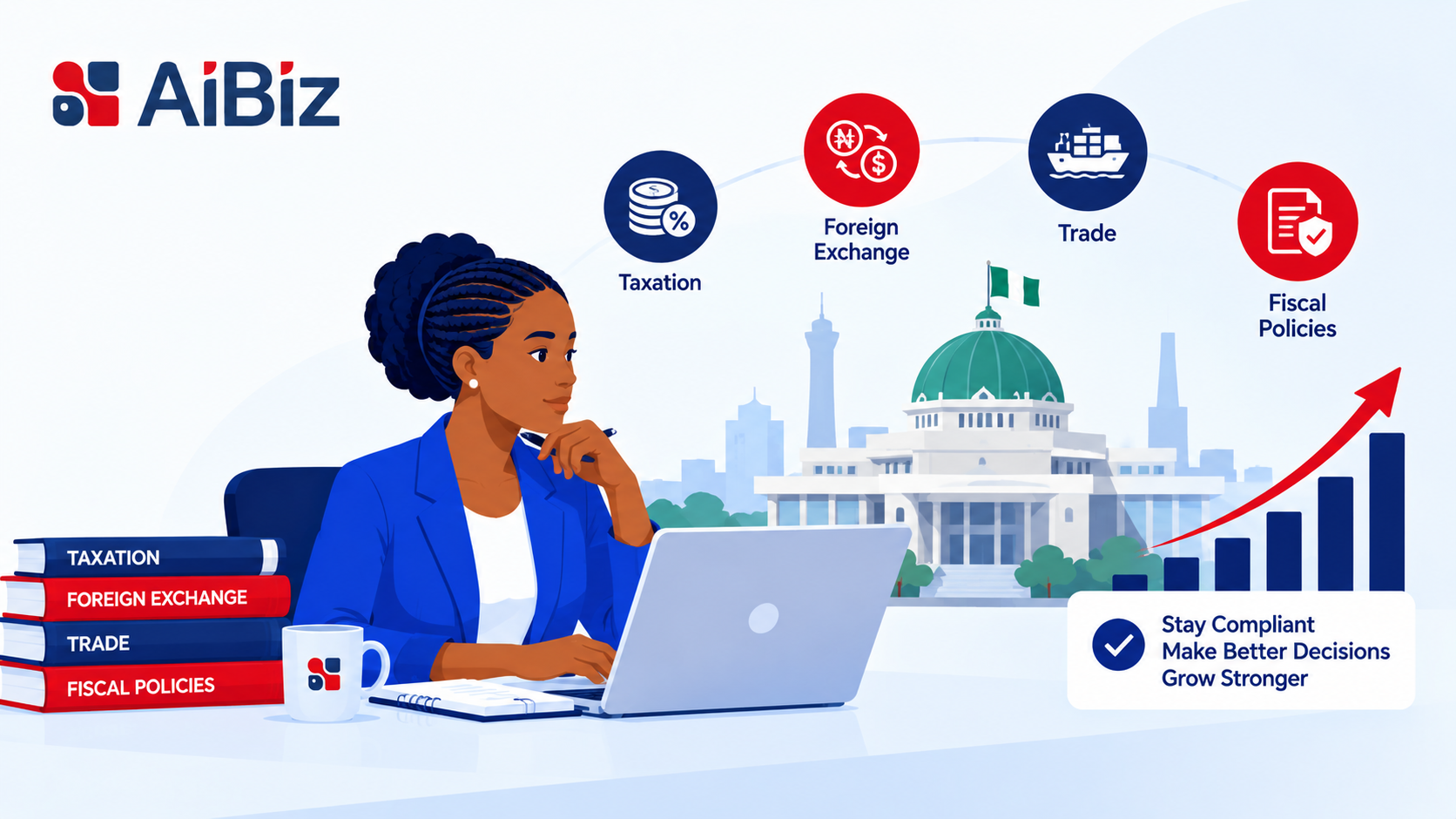
From taxation to foreign exchange, trade and fiscal policies, recent government reforms are reshaping the way businesses operate in Nigeria. These changes present both new opportunities and compliance challenges for businesses of all sizes. Understanding what these reforms mean and how they may affect your business is essential for staying compliant, managing costs and making informed decisions in an evolving business environment.
Businesses do not operate in isolation. Their ability to produce goods, manage costs, serve customers and remain profitable is significantly influenced by various factors around them. These factors are better known as the external environment and are often described with the acronym PESTEL- Political, Economic, Socio-cultural, Technological, Ecological and Legal environment. Government policies, particularly those relating to taxation, foreign exchange and trade, can directly affect the cost of doing business and the decisions companies make.
In recent years, Nigerian businesses have operated amid significant economic reforms. The President Bola Ahmed Tinubu Administration has introduced quite a number of policy changes, From the removal of fuel subsidy in 2023 to the Tax Acts 2025 and recent foreign exchange and fiscal policy measures, these reforms continue to reshape how businesses manage their costs, finances and operations. While some reforms create opportunities for growth and investment, others require businesses to adapt to new costs, risks and compliance requirements.
Tax Reform Acts 2025
The Tax Acts 2025 introduced significant changes to Nigeria's tax and tax administration framework. The Act became effective on the 1st of January, 2026. The reforms include the Nigeria Tax Act, Nigeria Tax Administration Act, Nigeria Revenue Service (Establishment) Act and Joint Revenue Board (Establishment) Act.
One major change is the expanded definition of a small company. Under the new framework, businesses with annual gross turnover of ₦100 million or less and total fixed assets not exceeding ₦250 million may qualify for certain tax exemptions, subject to the applicable provisions and conditions. Eligible businesses may benefit from exemptions from key taxes, including Companies Income Tax (CIT), Capital Gains Tax (CGT) and the Development Levy. While other companies would be required to pay a tax rate of 30%. Taxable Income has been expanded to include digital/ virtual asset gains, prizes, honorarium, grants and non-traditional sources.
The reforms also retain VAT at 7.5% as an important consumption tax while strengthening compliance requirements. It expanded zero rated items on which VAT is charged on 0% but the supplier can claim input VAT on related purchases. Taxable businesses are expected to maintain proper records and comply with the relevant invoicing and filing requirements. The introduction of the Economic Development Tax Incentive (EDTI) to replace Pioneer status incentive also creates opportunities for qualifying investments in priority sectors. Eligible companies may receive tax credits linked to qualifying capital expenditure over a specified period, subject to meeting the relevant conditions and maintaining appropriate records.
Another important provision is the Minimum Effective Tax Rate (ETR) set at 15% for certain categories of companies, effective from January 1, 2026. This rate applies to companies that are part of a multinational group with an annual turnover of ₦50 billion and above, or those operating within Nigeria. The ETR is calculated based on the company's net income, excluding certain deductions and incentives, and ensures that companies contribute a minimum amount of tax, regardless of their actual profits. If a company's actual tax liability falls below this threshold, a top-up tax is required to cover the shortfall.
For businesses, the key implication is the need for stronger financial record keeping, tax planning and compliance. While some businesses may benefit from exemptions and incentives, poor documentation could make it difficult to take advantage of these opportunities.
Foreign Exchange Policy
Foreign exchange reforms have also had a significant impact on Nigerian businesses, particularly those that depend on imported raw materials, machinery, inventory or foreign services.
The 2026 Foreign exchange Manual introduces stiffer penalties for non-compliance as Authorized dealer banks that process foreign exchange transactions without adequate documentation are now liable to a ₦100 million base fine, plus ₦10 million per affected transaction. The manual requires periodic returns on forward and swap transactions, electronic reporting of foreign currency exposure positions and compliance with the CBN’s requirement relating to Net Open Positions (NOP) limits.
The movement towards a more flexible and market-driven foreign exchange system is intended to improve transparency and reduce distortions in the foreign exchange market. The permissible advance payment threshold for physical imports has been increased to 30% of the Free on Board (FOB) value of the goods. A more efficient market can make it easier for businesses to access foreign currency and plan their international transactions.
However, exchange rate fluctuations remain a major challenge. A weaker naira increases the cost of imported goods and raw materials, raising production and operating costs. Businesses with foreign currency loans or other foreign obligations may also experience higher repayment costs.
Businesses can manage these risks by improving cash-flow planning, reviewing their pricing strategies, negotiating better supplier terms and increasing local sourcing where possible. Foreign exchange risk is therefore becoming an increasingly important part of business and financial planning.
Fiscal Policy Measures and Tariff Amendments
The recent Fiscal Policy Measures and Tariff Amendments also have important implications for businesses involved in importing, exporting and manufacturing. The 2026 Fiscal Policy Measures (FPM) implement a comprehensive review of Nigeria’s import tariff structure, affecting 127 tariff lines across critical sectors such as agriculture, automotive, and industrial inputs. Notable changes include:
Rice (bulk or >5kg packaging): reduced from 70% to 47.5%
Broken rice: reduced from 70% to 30%
Crude palm oil: reduced from 35% to 28.75%
Fully built passenger vehicles: tariffs lowered from 70% to 40%
Raw cane sugar: reductions ranging from 55% to 57.5% depending on type
Wheat or Meslin flour: maintained at 70%
Other industrial and consumer goods: reductions vary between 30% and 46.25%
The policy also reclassifies certain tariff lines and introduces Import Adjustment Taxes (IAT) on selected goods, with a phased reduction plan for non-AfCFTA items starting January 2027, gradually moving toward 0% over subsequent years. The FPM introduces a new excise duty regime and a Green Tax (environmental surcharge) effective July 1, 2026. 73 agricultural and related products remain restricted, while 77 items were removed from the previous Import Prohibition list
Changes in customs duties, import taxes and tariff classifications can directly affect the landed cost of goods and raw materials. Higher duties may increase operating costs for import-dependent businesses, while tariff reductions or exemptions on selected industrial inputs and machinery can help reduce production costs.
The reforms can also create opportunities for local manufacturers. Where tariffs make imported products more expensive, locally produced alternatives may become more competitive. Businesses may therefore need to review their supply chains and consider opportunities for local sourcing.
Importers and manufacturers should pay close attention to changes in tariff rates, customs regulations and prohibited goods, as these changes can directly influence procurement decisions, product pricing and profitability.
Conclusion
Government reforms will continue to shape Nigeria's business environment. While changes in taxation, foreign exchange and trade policy may create new challenges, they also present opportunities for businesses that are prepared to adapt.
For business owners, staying informed is essential. Strong financial management, proper record keeping, tax compliance and effective cost management will help businesses respond to policy changes and take advantage of the opportunities they create. In Nigeria's evolving business environment, adaptability and strategic planning will remain key to sustainable growth.