A business can generate millions in revenue and still struggle financially. Impressive profits and valuable assets do not always tell the complete story of a company's financial health. Understanding what lies beneath these figures requires more than simply reading financial statements; it requires proper analysis and interpretation. Discover how financial statement analysis and ratio analysis can help entrepreneurs, business owners and managers evaluate business performance.
A business can report billions in revenue and still struggle to pay its suppliers. It can record impressive profits but have very little cash available to fund its daily operations. It can also boast significant assets while carrying so much debt that its financial stability is constantly under pressure. So, what exactly do the numbers in a company's financial statements say about the business?
Financial statements are among the most important sources of information for understanding the financial health, performance and position of a business. They provide a picture of how much a company earns, what it spends, the assets it controls, the liabilities it owes and the overall value it has built over time. However, looking at these figures in isolation can sometimes create a misleading impression of how well a business is actually doing.
Imagine two businesses with annual revenues of ₦500 million. At first glance, they may appear to be performing equally well. However, one generates healthy profits, collects payments from customers promptly and has sufficient cash to meet its obligations. The other struggles with rising operating expenses, delayed customer payments and mounting debts. Although both businesses report the same revenue, their financial realities are significantly different.
This is where financial statement analysis and interpretation become important. Rather than simply looking at how large or impressive the figures appear, business owners and managers need to understand the relationships between these figures and what they reveal about the organization. In other words, it is not enough to know what the numbers say; you need to understand what they mean for your business.
Financial Statement Analysis: Looking Beyond the Figures
Financial statement analysis involves examining the information contained in a company's financial statements to understand its performance, financial position and ability to meet its obligations. Interpretation takes this a step further by explaining what the findings mean and how they should influence business decisions.
For business owners and managers, financial statements are not just documents prepared to satisfy accounting or regulatory requirements. They are management tools that provide valuable insights into business operations. They help answer important questions such as: Is the business becoming more profitable? Are operating costs increasing faster than revenue? Are customers paying on time? Is the company relying too heavily on borrowed funds? Does the business have enough resources to meet its short-term obligations?
The answers to these questions can help management identify potential problems, recognize opportunities and make more informed decisions. However, obtaining meaningful answers requires more than simply reading the income statement, statement of financial position and cash flow statement. It requires examining how different financial figures relate to one another.
Making Sense of the Numbers Through Ratio Analysis
One of the most effective ways to analyze and interpret financial statements is through ratio analysis. It involves comparing related figures in financial statements to understand different aspects of a company's financial performance and position.
Think of it this way: revenue tells you how much a business has generated from its activities, but it does not necessarily tell you how efficiently the business operates. Profit tells you what remains after expenses have been deducted, but it does not automatically indicate whether the company has enough cash to sustain its operations. Ratios help connect these figures and provide a clearer picture of what is happening within the business.
For instance, a business may record increasing revenue over three consecutive years. While this appears encouraging, examining its Return on Capital Employed (ROCE) could reveal whether the additional capital invested in the business is generating satisfactory returns.
Return on Capital Employed (ROCE)
Operating Profit × 100
Capital Employed
Similarly, Return on Assets (ROA) helps management understand how effectively the company uses its assets to generate profits, while Return on Sales (ROS) provides insight into how much operating profit the business generates from its revenue.
Return on Assets (ROA)
Profit After Tax × 100
Average Total Assets
Return on Sales (ROS)
Operating Profit × 100
Revenue
These measures help business owners move beyond the excitement of increasing sales figures to consider whether the business is actually becoming more efficient and profitable. After all, growing revenue is important, but generating better returns from the resources invested in the business is equally significant.
Another important area to examine is working capital management. A business may make substantial sales but still experience difficulties because customers take too long to pay for goods and services. The receivables collection period helps management understand how long customers take to settle their outstanding balances.
RECEIVABLES COLLECTION PERIOD
Average Trade Receivables × 365 Days
Credit Sales
Similarly, the average time taken to pay suppliers provides insight into how efficiently the business manages its payment obligations.
AVERAGE PAYABLES PAYMENT PERIOD
Average Trade Payables × 365 Days
Credit Purchases
The inventory holding period also helps management understand how long stock remains in the business before it is sold.
INVENTORY HOLDING PERIOD
Average Inventory × 365 Days
Cost of Sales
Understanding these working capital indicators allows managers to make better decisions about inventory purchases, customer credit policies and supplier relationships. It also helps businesses maintain a healthier balance between the money coming into the organization and the money going out.
Liquidity is another important consideration. Having assets worth millions does not necessarily mean a business has enough cash or readily convertible resources to meet its immediate obligations. A company could own buildings, machinery and other valuable assets but still struggle to pay salaries, settle supplier invoices or meet other short-term expenses.
The current ratio and acid-test ratio help assess a company's ability to meet its short-term liabilities using its current assets. The acid-test ratio provides a stricter assessment by excluding inventory.
CURRENT RATIO
Current Asset
Current Liabilities
ACID-TEST RATIO
Current Asset - Inventory
Current Liabilities
These ratios can help management determine whether the business has sufficient short-term resources to support its daily operations without constantly relying on additional borrowing or emergency funding.
Beyond day-to-day operations, understanding how a business finances its activities is equally important. Debt can be a useful source of capital, particularly when it is used to finance expansion, acquire productive assets or take advantage of growth opportunities. However, excessive borrowing can place considerable pressure on a company's finances.
The gearing ratio provides an indication of the extent to which a business relies on debt financing relative to its total capital, while the interest cover ratio assesses how comfortably its operating profits can meet interest payments.
GEARING RATIO
Debt × 100
Debt + Equity
INTEREST COVER RATIO
Operating Profit × 100
Finance Cost
A company with increasing debt and declining interest cover may be exposing itself to financial difficulties, particularly when interest rates rise or business performance weakens. These indicators help management assess whether its borrowing levels are sustainable and whether additional debt would be a sensible financing decision.
For businesses seeking to attract investors or evaluate their attractiveness in the capital market, investors' ratios also provide useful insights. Earnings per share (EPS) indicates the portion of a company's profit attributable to each ordinary share, while the price-to-earnings (P/E) ratio compares the market price of a share with its earnings per share.
EARNINGS PER SHARE (EPS)
Profit Attributable to Ordinary Shareholders
Weighted Average Ordinary Shares
PRICE-TO-EARNINGS (P/E) RATIO
Market Price per Share
Earnings per Share
These measures help investors assess a company's earnings performance and how the market values its shares. They also provide management with an understanding of how the company's financial performance translates into shareholder value.
Why Financial Statement Interpretation Matters to Business Owners and Managers
The real value of financial statement analysis is not in the ratios computed or the figures presented, but in the business decisions that follow. A ratio on its own is simply an indicator. Its significance comes from understanding what it reveals about the business and determining what action should be taken.
For instance, if a company's receivables collection period continues to increase, management should investigate why customers are taking longer to pay. It could be due to weak credit control policies, poor follow-up procedures or customers experiencing financial difficulties. Rather than waiting until the situation affects the company's cash flow, management can review its credit terms, strengthen collection procedures and reconsider the credit facilities offered to customers.
Likewise, if the inventory holding period is consistently increasing, it may be time to review purchasing patterns, sales forecasts and inventory management practices. Holding too much inventory ties down funds that could have been used for other productive activities. If the business is experiencing declining profitability despite increasing sales, management may need to examine its operating expenses, pricing strategy and cost structure to identify where efficiency is being lost.
Financial statement interpretation also helps businesses evaluate their performance over time. Comparing financial ratios across different accounting periods can reveal whether the company is improving, maintaining its position or gradually experiencing financial difficulties. It can also help management establish realistic targets, assess the effectiveness of previous decisions and determine areas that require improvement.
However, it is important not to interpret financial ratios in isolation. A current ratio that appears healthy for one industry may be considered inadequate in another. Similarly, a high gearing ratio may be normal for a capital-intensive business but concerning for a company operating in an industry with relatively low borrowing requirements. Financial ratios should therefore be assessed alongside industry benchmarks, previous performance, business objectives and prevailing economic conditions.
Turning Financial Information into Better Business Decisions
For financial statement analysis to be effective, businesses must also pay attention to the quality and reliability of the information used. Inaccurate records, incomplete transactions and poorly maintained financial information can produce misleading results and ultimately lead to poor decisions.
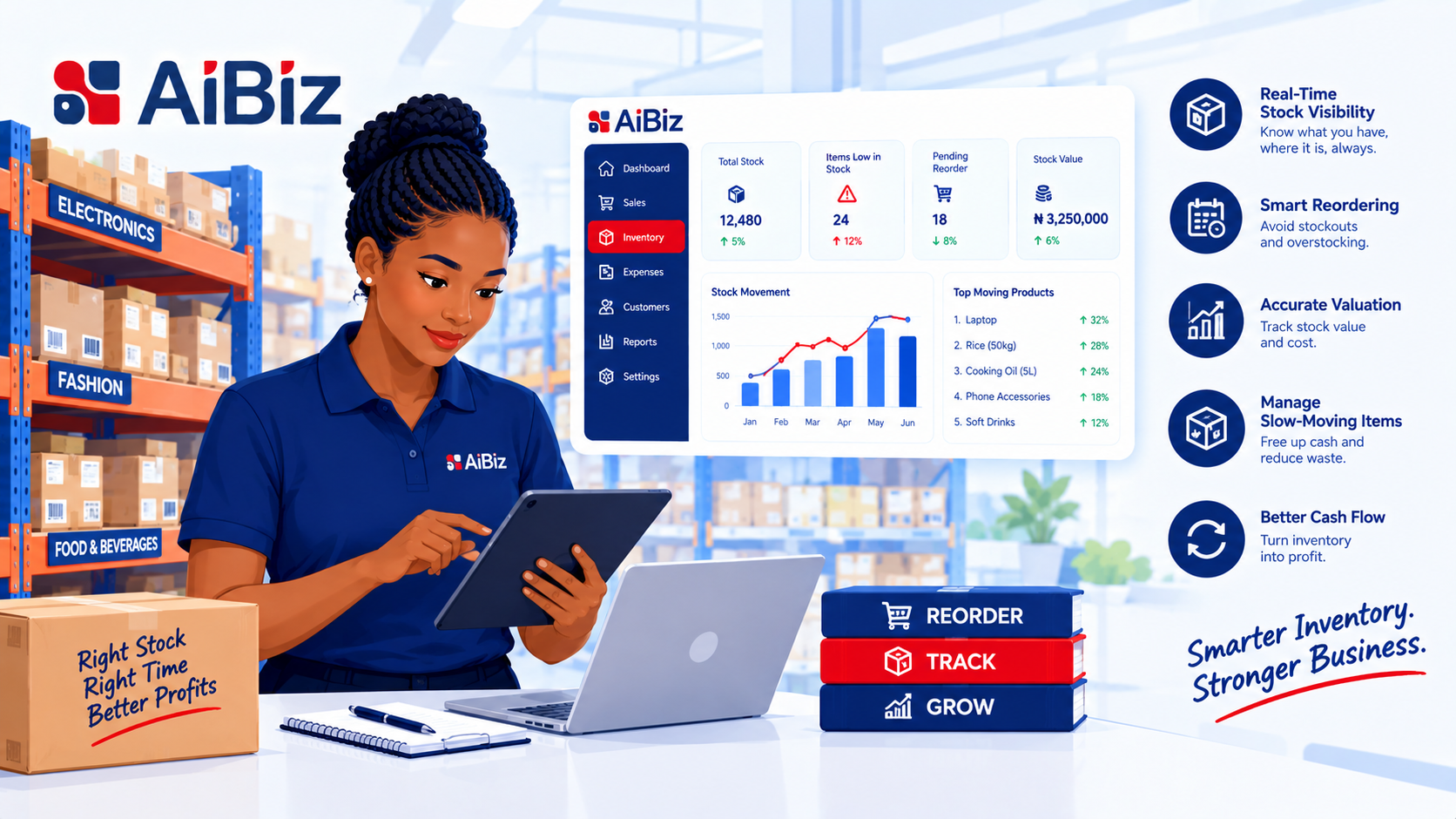
This is why proper financial record-keeping and the use of reliable business management systems are important. With business management software such as AiBiz, businesses can organize their financial and operational records, monitor transactions and generate reports that provide useful insights into their activities. These reports can support management in identifying unusual expense patterns, monitoring sales performance, tracking outstanding receivables and recognizing other potential areas of concern.
Although generating reports does not replace proper financial analysis and interpretation, having accurate and accessible information makes it easier for managers to understand what is happening within their businesses. It also provides a stronger foundation for making timely and informed decisions.
Ultimately, a successful business is not necessarily the one with the largest revenue, the most impressive assets or the highest reported profit. It is one that understands how effectively it uses its resources, manages its obligations, controls its costs and creates sustainable value.
Financial statements tell the story of a business, but analyzing and interpreting them helps you understand that story. For entrepreneurs, business owners and managers, learning to look beyond the figures is an important step towards building a financially sound, efficient and sustainable business.
Because in business, knowing your numbers is important, but understanding what they mean is what makes the difference.