Every business faces risks, but how well it identifies, assesses and manages them can determine its long-term success. Discover how effective risk management helps organizations minimize losses, make informed decisions and build resilience.
Every business operates in an environment filled with uncertainties. From unexpected market changes and financial difficulties to technological disruptions and operational challenges, businesses are constantly exposed to events that could affect their performance and long-term objectives. While some risks may present opportunities for growth, others could result in significant financial losses, reputational damage or even business failure.
Consider a manufacturing company that depends on a particular supplier for essential raw materials. A sudden disruption in the supplier's operations could delay production, increase operating costs and affect the company's ability to meet customer demands. Similarly, a business that fails to monitor its expenses may continue to record impressive sales figures while gradually experiencing a decline in profitability.
These situations highlight an important reality: identifying opportunities is essential to business growth, but understanding and managing the risks that accompany business activities is equally important.
Risk management is the process of identifying, measuring, assessing and developing appropriate responses to the risks an organization faces. It involves establishing the culture, structures and processes necessary to understand potential threats, evaluate their possible impact and determine the best ways to manage them. It is not simply about preventing things from going wrong; it is about preparing an organization to respond effectively when uncertainties arise.
Understanding the Risks Businesses Face
Not all business risks are the same. Some are pure risks, which involve the possibility of a loss without an accompanying opportunity for gain. Examples include fire outbreaks, workplace accidents, theft and natural disasters. Others are speculative risks, which involve the possibility of either a gain or a loss. These are often associated with business decisions such as investing in a new market, launching a product, expanding operations or introducing a new business strategy.
The nature of risks an organization is exposed to is often influenced by its industry, size, operations and business environment. For instance, a manufacturing company may be particularly exposed to health, safety and environmental risks arising from its production processes. A financial institution, on the other hand, may be more vulnerable to credit, market and liquidity risks.
Credit risk arises when customers or other parties fail to meet their financial obligations, while market risk results from unfavourable changes in market variables such as interest rates, exchange rates and commodity prices. Liquidity risk occurs when an organisation is unable to meet its financial obligations as they fall due. Technological risks, including cyberattacks, data breaches and system failures, can disrupt operations and compromise business information.
Reputational risk is another important consideration because the confidence of customers, investors, employees and other stakeholders can be affected by unethical practices, poor customer service or negative publicity. Unlike some other risks, reputational damage can spread quickly and may take considerable time and resources to repair.
Although these risks may vary across industries, no organization is entirely immune to them. The responsibility of management is therefore to understand the specific risks associated with its operations rather than adopt a general approach to risk management.
Identifying and Assessing Business Risks
Effective risk management begins with proper identification. Organizations must regularly examine their internal operations and external environment to recognize potential threats. This may involve reviewing financial records, assessing operational processes, monitoring market trends, evaluating regulatory changes and obtaining feedback from employees and customers.
However, identifying a risk is only the first step. Management must also determine how likely the risk is to occur and how significantly it could affect the organization if it materializes. This involves assessing both the likelihood of occurrence and the potential impact of the risk.
For example, a retail business that depends heavily on imported goods may be exposed to foreign exchange risk. A significant depreciation in the local currency could increase the cost of purchasing inventory, reduce profit margins and force the business to review its selling prices. By monitoring exchange rate movements and evaluating how much of its operating costs are exposed to foreign currency, management can better understand the extent of this risk and prepare appropriate responses.
One useful approach to assessing risks is the risk assessment matrix, which considers the likelihood of a risk occurring alongside the severity of its potential impact. Risks can then be classified as low, medium or high priority. A risk that has both a high likelihood of occurrence and a severe impact would require more urgent attention than one with a low likelihood and minimal consequences.
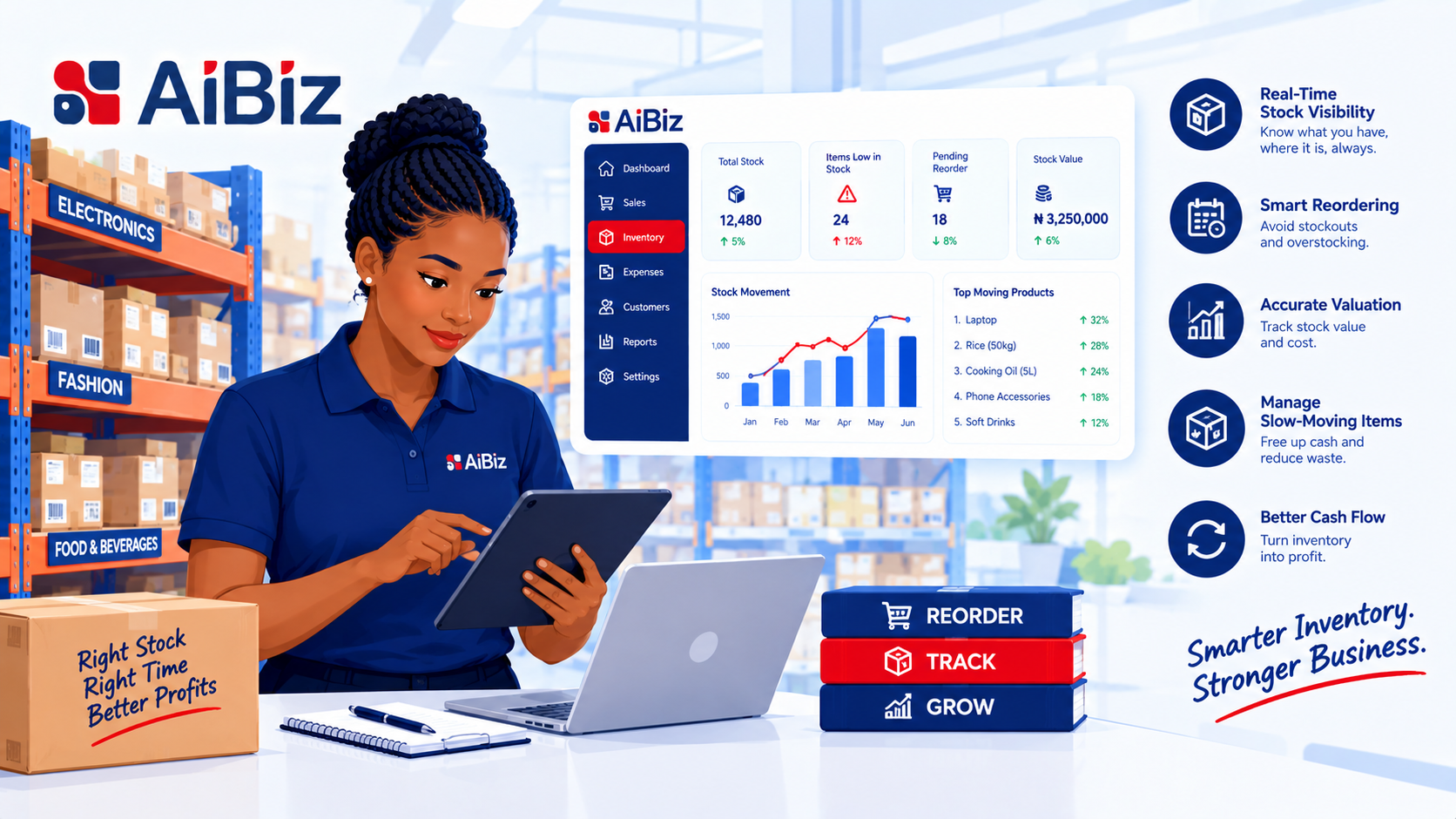
It is also important for management to have access to accurate and timely business information when carrying out these assessments. Business management software such as AiBiz can support this process by providing reports and insights into different areas of business operations.
For instance, sales reports can help managers identify declining sales trends or unusual changes in customer purchasing patterns. Inventory reports can reveal slow-moving products, stock shortages and excessive inventory levels, while expense reports can highlight increasing operating costs or unusual spending patterns. When properly reviewed, these reports can serve as early warning indicators, helping management recognise potential problems before they develop into more serious business risks.
By bringing sales, inventory, expense and other operational information together, AiBiz helps managers gain better visibility into business performance and make more informed decisions. Although software reports do not replace a comprehensive risk assessment or professional judgement, they provide useful information that can help management identify areas requiring further investigation and attention.
Managing Risks: Understanding the TARA Framework
After identifying and assessing risks, the next step is determining the most appropriate response. One useful approach is the TARA framework, which provides four possible strategies for managing risks: Transfer, Avoid, Reduce and Accept.
Risk transfer involves shifting the financial consequences of a risk to another party. For example, a business may purchase insurance to transfer the financial burden of certain losses, such as fire damage, theft or other insured incidents, to an insurance provider. This does not necessarily eliminate the risk itself, but it reduces the financial exposure of the organization.
Risk avoidance involves eliminating an activity or decision that exposes the organization to an unacceptable level of risk. A company may decide not to enter a particular market if the regulatory, financial or operational challenges associated with that market are too significant. While avoiding a risk may mean foregoing a potential opportunity, it may be the most sensible decision when the possible consequences outweigh the expected benefits.
Risk reduction focuses on implementing measures that lower either the likelihood of a risk occurring or the impact it could have. For instance, a manufacturing company can reduce health and safety risks by providing protective equipment, conducting regular equipment maintenance and training employees on workplace safety procedures. Similarly, businesses can reduce technological risks by investing in cybersecurity systems, conducting regular data backups and restricting access to sensitive information.
Risk acceptance, on the other hand, involves consciously deciding to retain a risk when its potential impact is considered manageable or when the cost of addressing it outweighs the expected loss. For example, a business may choose to accept a relatively minor operational risk while maintaining adequate contingency plans to respond if it occurs. However, accepting a risk does not mean ignoring it. It should still be monitored to ensure that any changes in its likelihood or potential impact are recognized.
The choice of strategy depends on the nature of the risk, its likelihood, potential impact and the resources available to manage it. In some situations, a combination of these strategies may be necessary. What matters is that every significant risk has been properly evaluated and that management has a clear response plan.
Building a Risk-Aware Business Culture
Risk management should not be treated as a one-time exercise or the sole responsibility of a risk management department. It should be an integral part of organizational culture and everyday decision-making. From senior management to employees responsible for daily operations, everyone should understand their role in identifying and reporting potential risks.
Having appropriate systems and internal controls also plays an important role. Proper documentation, regular financial reviews, effective inventory monitoring, clear approval procedures and adequate supervision can help reduce exposure to operational and financial risks. Technology can further support these efforts by improving record keeping, providing timely reports and giving managers better visibility into business activities.
This is where having an organized business management system becomes particularly valuable. With AiBiz, managers can access reports covering sales, inventory, expenses and other business activities, making it easier to monitor performance and identify unusual trends. Rather than depending entirely on scattered records or waiting until the end of a reporting period to discover problems, management can use available business information to make more timely decisions and investigate potential warning signs.
More importantly, risks are not static. Changes in economic conditions, technology, customer behaviour, regulations and industry practices can introduce new threats or increase existing exposures. Consequently, risk assessments and mitigation strategies should be reviewed regularly to ensure they remain relevant and effective.
Ultimately, successful organizations are not necessarily those that encounter the fewest risks, but those that understand the risks they face and are adequately prepared to manage them. By identifying industry-specific risks, assessing their likelihood and potential impact, and adopting appropriate mitigation strategies, businesses can protect their resources, minimize potential losses, improve decision-making and build resilience against uncertainty.
After all, sustainable business growth is not just about recognizing opportunities; it is also about understanding and managing the risks that come with them.